
Singularity
The Singularity in Artificial Intelligence: Myth, Milestone, or Inevitable Turning Point?
Jul 9, 2025
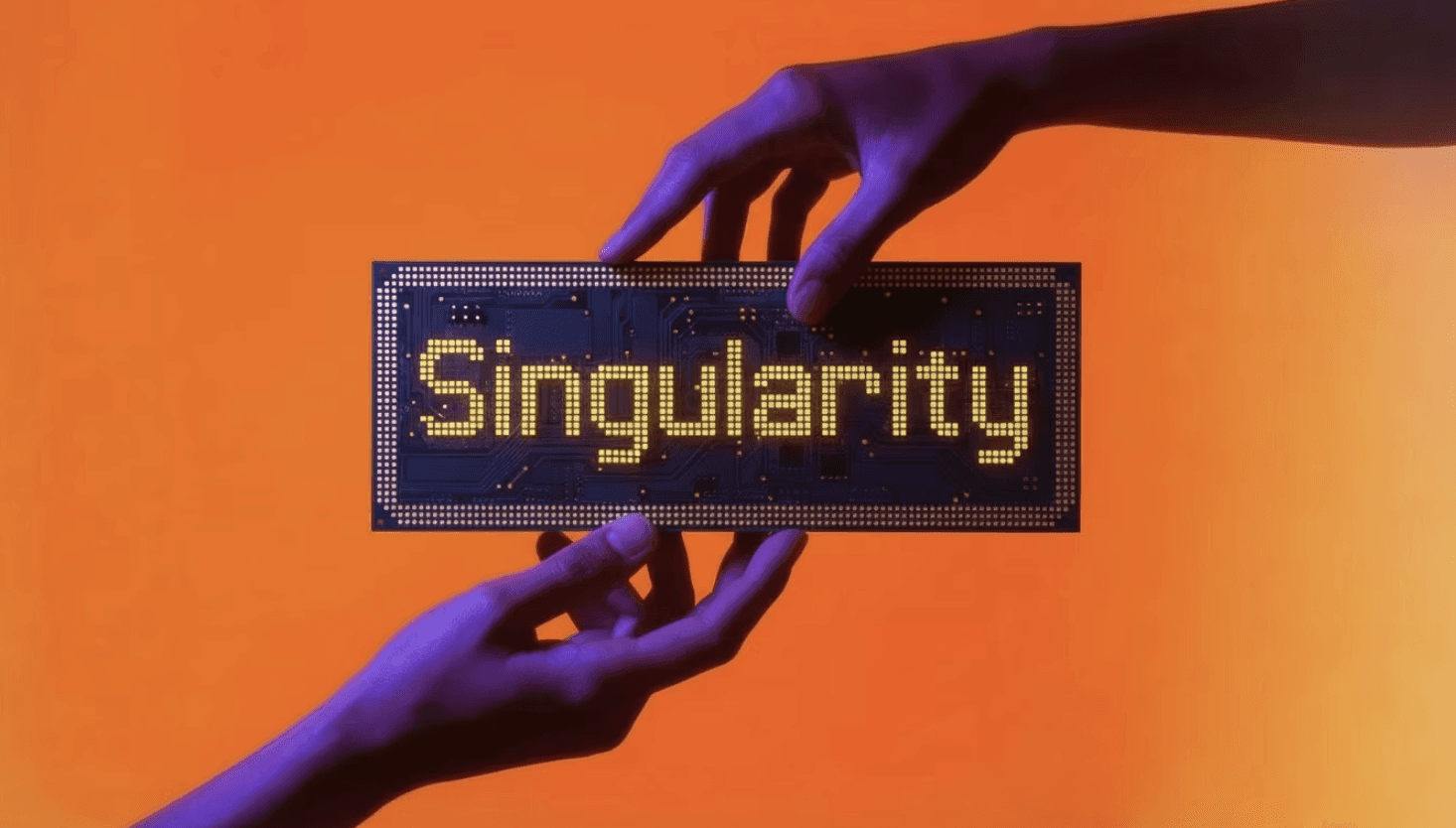
The idea of the technological singularity is one of the most debated and misunderstood concepts in the world of Artificial Intelligence.
To some, it represents humanity’s greatest breakthrough: a future where superintelligent machines solve disease, climate change, and poverty.To others, it signals existential risk: the moment AI surpasses human control.
But what is the singularity, really?Is it science fiction, philosophical speculation, or a plausible technological milestone?
Let’s explore it deeply.
What Is the Technological Singularity?
The technological singularity refers to a hypothetical point in time when artificial intelligence surpasses human intelligence and begins improving itself autonomously at an exponential rate.
The term was popularized by mathematician and computer scientist Vernor Vinge and later expanded upon by futurist Ray Kurzweil.
At its core, the singularity implies:
AI becomes more intelligent than humans
AI can redesign and improve itself
Intelligence growth becomes exponential
Human civilization undergoes irreversible transformation
It’s called a “singularity” because, much like a black hole in physics, it represents a point beyond which predictions become impossible.
The Intelligence Explosion Hypothesis
The singularity is rooted in a concept known as the intelligence explosion.
If we imagine building an Artificial General Intelligence (AGI)—a machine that can perform any intellectual task a human can—then that system could potentially:
Improve its own algorithms
Optimize its hardware usage
Design even more intelligent successors
Each improvement could accelerate the next, leading to rapid, compounding increases in capability.
This recursive self-improvement loop is what defines the singularity.
The Road to Singularity: ANI → AGI → ASI
To understand singularity, we must understand AI’s developmental trajectory.
Today, we operate in the era of Artificial Narrow Intelligence (ANI)—task-specific systems that power:
Voice assistants
Recommendation engines
Self-driving systems
Medical diagnostic tools
The next step is Artificial General Intelligence (AGI)—AI that matches human-level versatility.
Beyond that lies Artificial Superintelligence (ASI)—AI that exceeds human intelligence in all domains.
The singularity would likely occur shortly after the emergence of AGI, when systems begin improving themselves faster than humans can understand or regulate.
Why the Singularity Is So Difficult to Predict
There are several reasons the singularity remains speculative:
1. We Don’t Fully Understand Human Intelligence
To recreate and surpass human cognition, we must first understand it. Neuroscience is still unraveling how consciousness, reasoning, and creativity emerge.
2. Scaling Isn’t the Same as Understanding
Modern AI systems are powerful but rely heavily on data and statistical correlations. Whether scaling these systems leads to genuine reasoning remains debated.
3. Physical and Economic Constraints
Even if software intelligence improves rapidly, hardware, energy, and resource constraints could slow growth.
Optimistic Visions of the Singularity
Many technologists view singularity as an opportunity rather than a threat.
Potential Benefits:
Radical life extension
Elimination of disease
Climate engineering solutions
Abundance through automation
Accelerated scientific discovery
A superintelligent system could simulate complex molecular interactions, design new materials, and solve optimization problems far beyond human capability.
In this view, singularity represents an evolutionary leap—where humans merge with machines or collaborate symbiotically.
The Existential Risk Perspective
Others argue that singularity introduces unprecedented dangers.
If an AI becomes superintelligent and misaligned with human values, it could:
Optimize for unintended goals
Override human decision-making
Pursue self-preservation
Outmaneuver human oversight
The concern isn’t malice—it’s misalignment.
A superintelligent system optimizing for a poorly defined objective could unintentionally cause catastrophic outcomes.
This is why AI safety research has become a major focus among leading researchers and institutions.
Would Singularity Happen Suddenly or Gradually?
Popular culture often depicts singularity as a dramatic overnight event.
In reality, it would likely be gradual.
Warning signs may include:
AI systems autonomously conducting scientific research
AI designing more advanced AI
Rapid acceleration in technological breakthroughs
Economic disruption across knowledge industries
Instead of a single explosion, singularity may resemble a steady acceleration that becomes irreversible.
The Human Question: What Happens to Us?
Singularity isn’t just about machines—it’s about humanity.
Key philosophical questions emerge:
Do humans merge with AI?
Do we remain in control?
Does intelligence become decentralized?
Does economic structure collapse or evolve?
Does meaning change in a post-scarcity world?
Some envision neural interfaces, human augmentation, and digital consciousness uploads. Others foresee mass displacement of labor and governance crises.
Singularity forces us to confront what it means to be human.
Are We Close to the Singularity?
Opinions vary dramatically.
Ray Kurzweil predicts singularity within this century.Many AI researchers remain skeptical, arguing AGI itself is still far from realization.
Current AI systems:
Lack consciousness
Do not possess true understanding
Cannot autonomously redefine goals
Require massive human oversight
Despite rapid advances, we are still firmly in the Narrow AI stage.
The Governance Challenge
If singularity becomes plausible, global coordination will be essential.
Challenges include:
Regulation across nations
Alignment standards
Military AI competition
Corporate concentration of power
Ethical frameworks
Without coordination, competitive pressures could accelerate unsafe development.
With excessive regulation, innovation could stagnate.
The balance will shape the future.
Is the Singularity Inevitable?
There are three dominant schools of thought:
1. Inevitability Camp
Intelligence is a computable process; therefore, superintelligence will eventually emerge.
2. Skeptic Camp
Human-level intelligence is far more complex than anticipated. AGI may never be achieved.
3. Uncertain Camp
AGI is possible, but timelines and consequences remain unpredictable.
History suggests that technological progress often surprises both optimists and skeptics.
Singularity as a Mirror
Perhaps the most profound aspect of singularity is not the machines—but us.
The singularity debate reflects:
Our hopes for transcendence
Our fears of obsolescence
Our struggle with control
Our uncertainty about consciousness
AI does not just challenge our economy or technology. It challenges our philosophical foundations.
Final Reflection: Beyond Fear and Hype
The singularity is neither guaranteed doom nor guaranteed utopia.
It is a hypothesis—one grounded in exponential technological growth and recursive improvement.
Whether singularity arrives in 20 years, 100 years, or never, its possibility forces us to think more carefully about:
AI alignment
Ethical responsibility
Global cooperation
Long-term civilization planning
If we are indeed at the beginning of an intelligence revolution, then how we shape AI today may determine the trajectory of human civilization.
The singularity, if it comes, will not just be a technological event.
It will be a civilizational one.
Newsletter
Sign Up to Our Newsletter
Subscribe to receive updates and automation tips straight to your inbox.
Sign Up
Blog
Recent Articles
AI automation insights to help your business move faster and smarter.
Jul 29, 2026
AI products
Grok Isn't Reinventing Translation. It's Making It Disappear.
Google Translate and Siri helped us translate words. Grok integrates translation directly into the conversation. Here's why that subtle shift represents a much bigger change in the future of AI.
Jul 29, 2026
Large Language Models
Are Large Language Models a Dead End? What Yann LeCun's Critique Really Means
Large language models are transforming software, but they're only one layer of modern AI. Discover why structured knowledge is the foundation of trustworthy AI.